Compliance audits are a central part of how university researchers account for and maintain federal grant funding; noncompliance can lead to funding freezes or clawbacks. For example, between 2021 and 2023, independent audits identified about $9.3 million in questioned costs for NIH grant awardees, with about $3.3 million repaid by researchers.1
Large universities may support teams internally, yet principal investigators and research assistants still carry much of the day-to-day burden of aligning spending and research practices with federal rules. Regulatory text and blogs are dense with legal jargon, general-purpose language models give generic or hard-to-trust answers, and external auditors are often expensive.
1
U.S. Government Accountability Office, National Institutes of Health: Monitoring of External Research Can Be Improved, GAO-25-107362 (Apr. 2025).
Read the report.
Where complyraAI fits
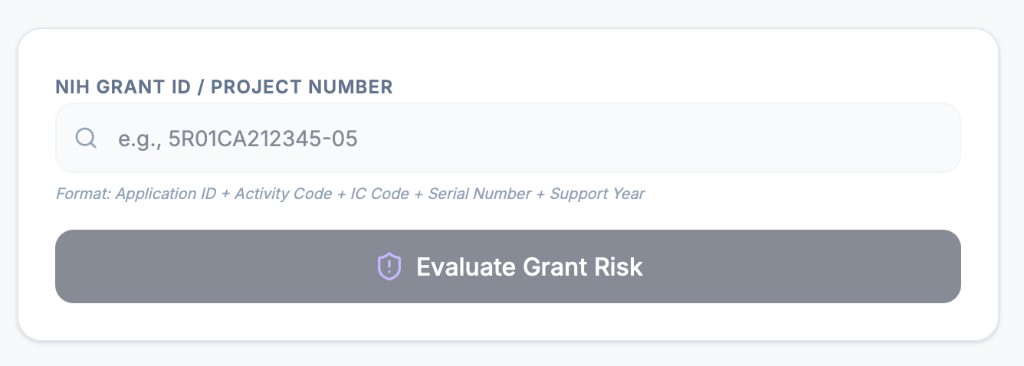
complyraAI pairs research assistants with AI that audits transaction-level spending, scores grant-specific risk, and surfaces issues earlier—strengthening defensibility and reducing the likelihood of findings and funding loss.